

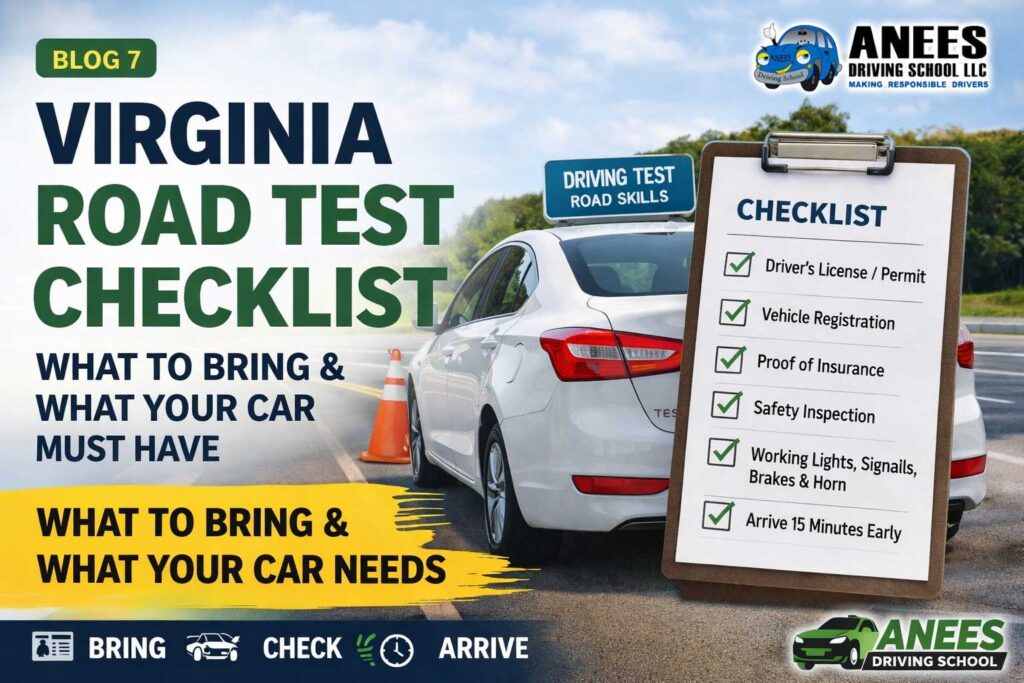
Introduction
Road test day makes even confident drivers tense. Most people assume the hardest part will be the actual driving, but many tests go wrong before the vehicle even leaves the parking space. A missing document, a light that does not work, or a last-minute rush can turn a manageable day into an avoidable problem.
That is why a road test checklist matters. It gives students a calm, realistic way to prepare before test day instead of relying on memory and panic.
What to bring before you leave home
The best place to start is with paperwork. Before leaving for the road test, students should check every required document the night before, not while sitting in the car outside the DMV. A simple folder with everything in one place prevents the most common mistakes.
Students also benefit from thinking through the full morning in advance. If the test is scheduled early, that means making sure the car is ready the day before, not trusting that everything will be fine on a rushed morning.
Why the test vehicle matters more than students expect
Many students put all of their energy into practicing turns, parking, and lane changes, then forget that the vehicle itself must be acceptable for the test. If something basic is not working, the test may not even begin.
That is why a careful vehicle check matters. Brakes, signals, mirrors, seat belts, lights, and the general condition of the vehicle should never be assumed. A car that feels fine during a short family drive may still create a problem on test day if something simple has been overlooked.
Do a calm pre-test vehicle check
The smartest approach is to treat the vehicle check like part of the lesson, not part of the stress. Walk around the car. Test the lights. Check the horn. Confirm that the registration and inspection status are not a surprise. Make sure the inside of the car is clean enough that the student can focus.
Students usually feel better when nothing inside the car adds to the pressure. If mirrors are adjusted, the seat is comfortable, and the student already drove the same vehicle recently, the road test feels less unfamiliar from the start.
Arriving the right way helps more than people think
Arriving early helps students shift from rushed mode into driving mode. A late arrival can ruin concentration before the test even begins. A few quiet minutes to breathe, review the basics, and settle into the seat can make a big difference.
This is also why many students benefit from a short lesson close to the test date. A final review helps correct small habits, but just as importantly, it helps the student walk into the test feeling organized rather than shaky.
Common mistakes to avoid
One common mistake is focusing only on the hard maneuvers while ignoring the small things. Students practice parallel parking repeatedly but forget basic observation, speed control, or smooth stops. Another common mistake is assuming the family car will automatically be test-ready without checking it carefully.
The strongest road test preparation is balanced. It covers the vehicle, the paperwork, the timing, and the actual driving. When one of those pieces is missing, test day becomes harder than it needs to be.
Final thoughts
A road test checklist is not just about avoiding technical issues. It is about helping the student feel calm, prepared, and focused on the part that really matters: safe driving.
When students arrive with the right documents, the right vehicle, and the right mindset, the test becomes much more manageable. Anees Driving School can help students sharpen those final details before test day.
FAQ
Should I check the car the same day or the night before?
The night before is better because it gives you time to fix problems instead of discovering them at the last minute.
Why do students fail before the driving even starts?
Often because of missing paperwork, a vehicle issue, or arriving rushed and unprepared.
Is a final practice lesson worth it before the road test?
For many students, yes. It helps with confidence, small corrections, and overall organization.
What matters most on road test day?
A combination of preparation, a test-ready car, complete documents, and calm, consistent driving habits.