

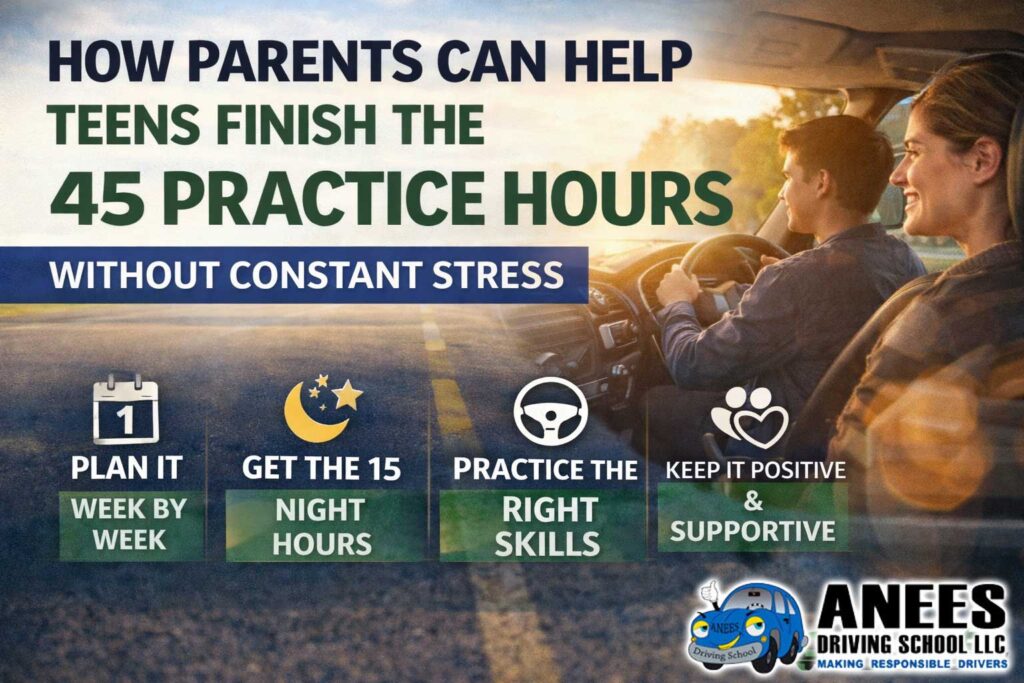
For many parents, the 45 practice hours sound manageable at first. Then real life starts. School schedules get busy, parents are tired after work, weather changes, and every practice drive seems harder to plan than expected.
That is why so many families fall behind. The problem is rarely lack of effort. It is usually lack of structure.
Why parents should stop thinking in one big number
The biggest mindset shift is to stop treating 45 hours like one giant block. When parents keep thinking, ‘We still have so many hours left,’ the process starts to feel impossible. A much better approach is to break it into smaller, repeatable pieces.
Short, planned drives are easier to fit into real life. Fifteen minutes here and thirty minutes there adds up much more smoothly than waiting for long perfect practice sessions that rarely happen.
Create a simple weekly rhythm
Families do better when driving practice becomes part of the week instead of an occasional emergency. One or two short weekday drives and one slightly longer weekend drive often works far better than random practice whenever someone remembers.
This rhythm also reduces conflict. When the teen expects practice to happen, there is less arguing, less procrastination, and less panic near the end.
Do not save the hard hours for the very end
Another common mistake is postponing night driving and more challenging conditions until the student is almost done. That creates unnecessary pressure because the hardest hours are left for last.
A better method is gradual exposure. Start simple, then slowly build in evening drives, busier roads, parking work, and more varied conditions while the student still has time to improve.
Focus on one goal per drive
Practice sessions work better when they have a clear purpose. One drive can focus on smooth turns. Another can focus on lane changes. Another can focus on parking. Another can focus on calmer driving in traffic.
When every drive tries to fix everything at once, both parent and teen get frustrated. Focused practice usually feels calmer and leads to better progress.
Protect the parent-teen relationship
The hardest part for many families is not the road. It is the emotional tone inside the car. When a parent sounds tense or a teen becomes defensive, the drive turns into an argument instead of a learning session.
Parents help more when they give fewer panicked corrections and more specific, calm feedback. If the student is overwhelmed, shortening the session is often smarter than forcing a longer stressful drive.
Use professional help when needed
Parents do not have to do every part alone. Some students progress much faster when a professional instructor helps build the foundation and the parent supports the weekly hours at home.
That mix often works especially well for nervous teens or busy families. It lowers tension at home and gives the teen more consistent guidance.
Final thoughts
Helping a teen complete 45 practice hours does not have to become a months-long struggle. The process becomes much easier when families break it into smaller sessions, plan ahead, and build difficulty gradually.
Anees Driving School can support both the parent and the teen so those hours lead to real confidence instead of constant stress.
FAQ
What is the easiest way to finish 45 hours?
Break the hours into short, regular practice sessions instead of waiting for long perfect drives.
Should parents wait to do night driving until the end?
No. Gradual evening practice works much better than saving the hardest hours for last.
Why do parent-teen practice drives become stressful?
Usually because the sessions are unplanned, too long, or emotionally tense from the start.
Can professional lessons reduce stress at home?
Yes. They often give the teen better structure and reduce tension between parent and student during practice.