

Introduction
Getting a learner’s permit is exciting, but for most Virginia families the confusing part starts after the permit is issued. Parents wonder when lessons should begin, teens ask when they can finally get licensed, and both sides usually hear different answers from friends. The truth is that Virginia has a very specific path for teen drivers, and understanding that path early makes everything less stressful.
If your family understands the timeline from the beginning, it becomes much easier to plan lessons, supervised practice, required classroom steps, and the final move toward a license. Instead of rushing at the last minute, you can build confidence step by step.
When the process starts
In Virginia, a teen can begin the classroom portion of driver education at age 15 years and 6 months. A learner’s permit is required for the driving portion, but not for the classroom portion. That means families do not need to wait until the last possible moment to start preparing.
This is where early planning helps. Students who begin with a clear schedule usually feel less pressure later, especially when they start balancing school, activities, and driving practice all at once.
Why the permit timeline matters
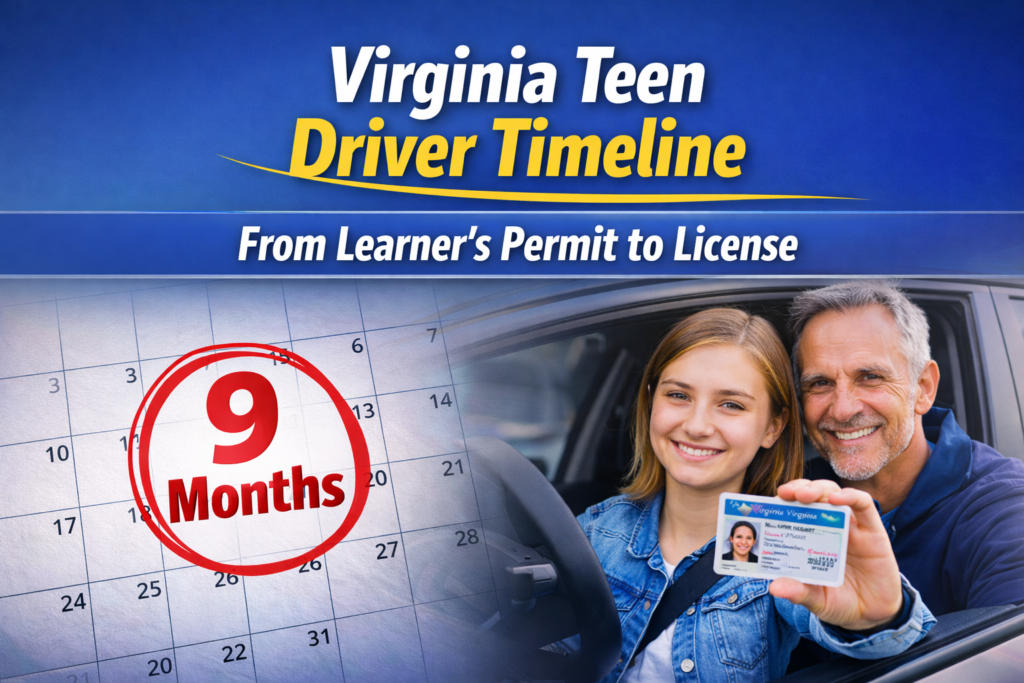
For drivers under 18, the learner’s permit must be held for at least nine months before a driver’s license can be issued. Many families assume the timeline depends only on age or skill level, but the calendar matters too. Even a confident student cannot skip that waiting period.
That is why it makes sense to think of the permit as the beginning of a structured learning period, not just a temporary step before a road test. The strongest teen drivers build habits slowly and consistently over those months.
How to use the practice period well
A smart way to approach the permit period is to divide it into stages. The first stage should focus on control and comfort, including smooth braking, turns, parking lots, neighborhood streets, and lane position. The second stage should introduce busier roads, traffic lights, lane changes, and better observation. The final stage should focus on judgment, consistency, and calm decision-making in real traffic.
This kind of progression helps teens avoid a common mistake: practicing only the easiest tasks for too long. Growth happens when students gradually expand the type of roads, conditions, and situations they can handle with confidence.
The 45-hour requirement
Parents should also keep the required practice hours in mind from the start. Virginia requires a parent or guardian to certify at least 45 hours of supervised driving practice, including 15 hours after sunset. These hours should not be treated like a box to check at the last minute.
The best approach is to spread the hours across the permit period. Short, regular drives usually work better than rare, exhausting practice sessions. A few neighborhood drives, some parking practice, daytime traffic exposure, and gradual night driving all add up in a much more realistic and less stressful way.
Do not forget the parent-teen component
Families also need to remember the 90-minute parent-teen component that applies to many Virginia teens as part of driver education. This step is easy to overlook when parents focus only on the permit, lessons, and practice log.
When parents understand their role early, the entire process becomes smoother. Clear expectations at home usually lead to better practice sessions, better communication, and fewer last-minute surprises.
Final thoughts
By the end of the teen licensing process, the goal should be much bigger than simply passing. A teen should look and drive like someone who can handle real-world roads safely, calmly, and consistently.
If your family plans early, spreads out practice, and gets the right instruction at the right time, the path from permit to license becomes much more manageable. Anees Driving School can help students build that confidence step by step.
FAQ
When can a teen in Virginia start driver education?
A teen can begin the classroom portion of driver education at age 15 years and 6 months. A learner’s permit is needed for the driving portion.
How long must a teen hold a learner’s permit?
For drivers under 18, the learner’s permit must be held for at least nine months before a license can be issued.
How many supervised practice hours are required?
Virginia requires 45 supervised hours, including 15 hours after sunset, certified by a parent or guardian.
What is the best way to complete the practice hours?
Most families do better with short, regular practice sessions spread across the permit period instead of rushing to finish the hours at the end.
Anees Driving School can support students and families with the next step, whether that means teen instruction, the parent-teen course, adult waiver guidance, or private lessons.