

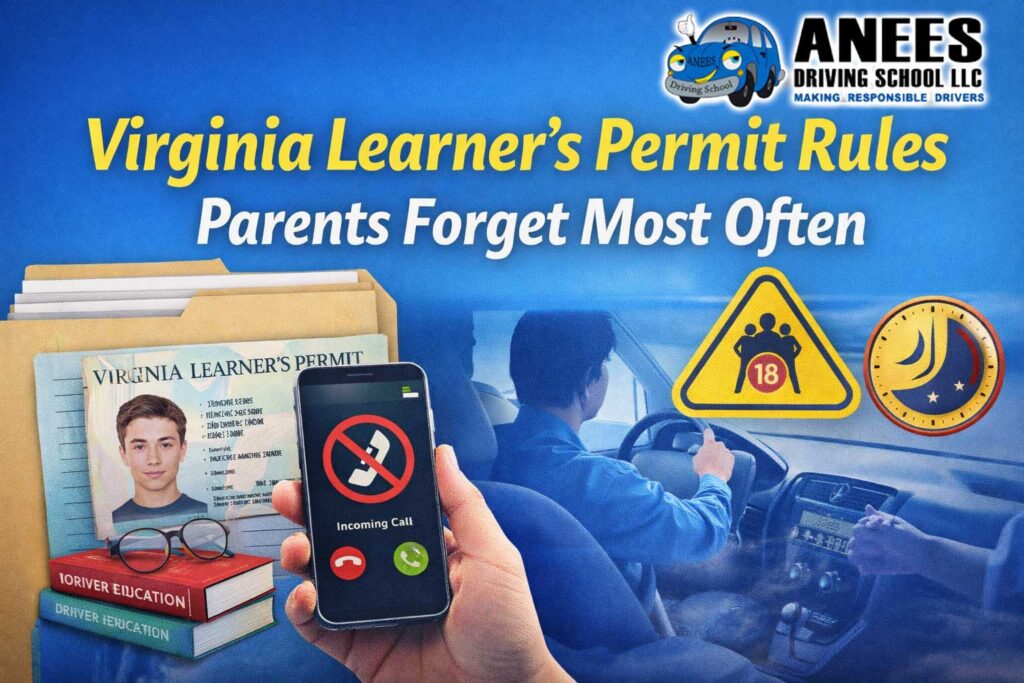
A teen gets a learner’s permit and the family feels relieved because the first big hurdle is over. Then real life begins. Practice drives have to happen, schedules need to be coordinated, and parents suddenly realize they are the ones managing a large part of the learning process.
That is where small rule mistakes begin. Most parents do not ignore the rules on purpose. They simply assume the permit works like a beginner license. It does not. The permit stage has its own restrictions, and families who understand them early usually have calmer practice sessions and fewer surprises.
The supervising driver rule matters more than parents think
A learner’s permit does not allow a teen to drive alone just because the roads are quiet or the destination is close. A licensed driver must be seated beside the permit holder. In most cases, that person must be at least 21 years old. There are limited family exceptions, but the key point is that permit driving is supervised driving.
Parents sometimes treat short errands as harmless exceptions. That is risky thinking. The permit stage is designed around support, coaching, and immediate help if something goes wrong. The adult in the front seat is not there just to satisfy a rule. That person is there because a new driver still needs active guidance.
Passenger rules are easy to underestimate
Another detail families forget is how passenger rules affect teen driving. A learner’s permit holder may not carry more than one passenger under 18, and even that rule has family exceptions that people often misunderstand. What matters most is that the car should not feel crowded, loud, or socially distracting while a new driver is still learning.
Parents sometimes allow extra teen passengers because everyone is just going to the same place. That usually makes the drive harder, not easier. New drivers need a calm environment. Too many conversations, jokes, and shifting attention can turn basic practice into a distracted drive very quickly.
Phones and distractions should not be part of practice
Families also need to be strict about phones. Virginia law does not treat phone use while driving as a small habit to manage casually. A teen who is learning should already understand that the phone is out of the routine before the license is ever issued.
Good parents do more than repeat the rule. They create the habit. Silence the phone, put it away, and make the practice drive feel focused from the beginning. That one expectation shapes attention, confidence, and safety more than many families realize.
Parents still control the quality of the practice hours
The state requires practice hours, but the quality of those hours is just as important as the number. A parent or guardian will eventually certify that the teen completed the required supervised driving time, including nighttime driving. That means the family should not treat practice as random errands with no teaching value.
A stronger routine is to practice with purpose. One drive might focus on turns and lane position. Another might focus on parking. Another might focus on busier roads or nighttime confidence. When parents treat practice like skill-building instead of simple mileage, teens improve much faster and with fewer bad habits.
Final thoughts
Most permit mistakes start with assumptions. A parent assumes a short solo drive is harmless, a few extra passengers are fine, or a phone in the cupholder is not a big deal. Those are exactly the moments when structure matters most.
The permit stage should feel supervised, calm, and deliberate. If parents keep the rules clear and the practice focused, teens usually become safer and more confident drivers by the time they move toward licensing.
FAQ
Who must sit with a teen who has a learner’s permit?
A licensed driver must sit beside the permit holder, and in most cases that supervising driver must be at least 21 years old.
Can a permit holder drive with a car full of friends?
No. Passenger limits still apply, and the permit stage should stay calm and supervised rather than crowded and distracting.
Should parents allow phone use during practice?
No. The best habit is to remove the phone from the routine completely so the student learns focused driving from the beginning.
Should this post link to other Anees pages?
Yes. It should link to the teen course pages, the parent-teen course page, and Register Online so parents can move from reading to action.
Anees Driving School can help parents turn permit practice into a more structured and less stressful learning process.